
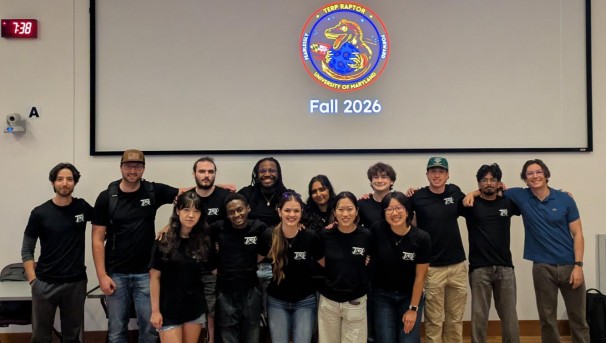





Description
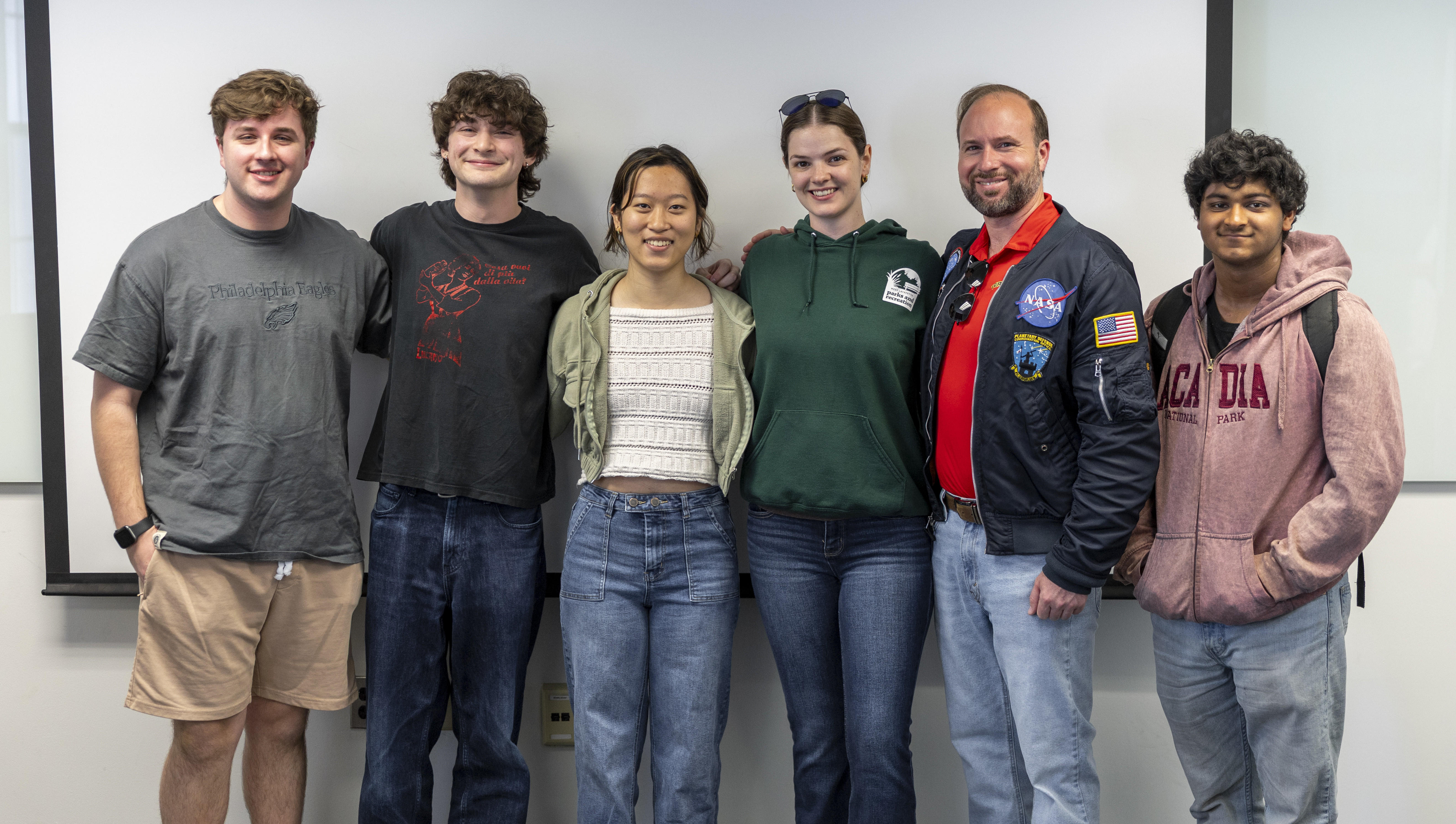
WE HAVE LAB SPACE TO BUILD OUR CUBESAT AT NASA Goddard Space Flight Center!
MISSION DESCRIPTION
Apophis is a potentially hazardous asteroid (PHA) that is roughly 350 meters in size, or about as wide as the Eifel Tower is tall. On April 13th, 2029, this wonderful asteroid will make an extraordinary close approach with Earth, a one-in-7500 years event. Generations to come may never see something like this with their own eyes. Although Apophis will pass very close to our planet, we can fortunately say with confidence that it will definitely not hit Earth.
The University of Maryland's TERP RAPTOR is an interdisciplinary student CubeSat spacecraft mission, aimed at the asteroid Apophis. TERP RAPTOR is a 12U CubeSat equipped with a specialized camera, and laser retro-reflectors, to be carried to Apophis by a commercial partner to perform a flyby of the asteroid. This would put our mission on track to reach Apophis before any other currently green-lit mission.
TERP RAPTOR will be deployed before the asteroid flyby, and a LIDAR system onboard the host spacecraft will track the CubeSat before, during, and after the asteroid flyby. The LIDAR ranging data between the two spacecraft reveals deflection of the spacecraft trajectories due to the asteroid's gravity, which in turn reveals the asteroid's mass.
 Apophis flying past the Earth, coming closer than many of our own satellites. Credit: NASA/Caltech/JPL
SCIENTIFIC VALUE
Asteroid mass is the most important physical property to measure for planetary defense, critically informing both the modeling of potential Earth impact damage, and the design of space missions to deflect or destroy asteroids. However, asteroid mass is VERY hard to measure during a high-speed reconnaissance flyby. Our proposed dual-spacecraft + LIDAR technique will be a 7x improvement in mass measurement accuracy over the current state-of-the-art.
The data our mission provides about Apophis's mass, shape, and surface features will help us understand the asteroid's gravity field and rotational dynamics. This information will give other missions to Apophis a significant head-start in refining their proximity operations plans before they reach the asteroid.
See our website link at the bottom of the page for more information.
EDUCATIONAL VALUE
In the past year alone, our students have had the chance to participate in two independent mission design studies with government and industry entities, attend conferences, lead technical reviews, engage with component vendors, publish a journal paper, learn and apply real engineering principles in their teams, and build out the university's first CubeSat program - and we haven't even gotten off the ground yet. Additionally, the majority of the organization, leadership, and management of those of those activities was performed by the students themselves. They have truly started a new program from the ground up. At UMD, we strive for excellence and we dare to push through every obstacle. This mission, filled with so many firsts, will be the experience of a lifetime for our students and mold them into your next entry level engineers, scientists, and businessmen and women.
TERP RAPTOR BLAZES NEW TRAILS
- Our mission reaches Apophis in December 2028, several months before any other currently planned mission.
- Our mission will demonstrate the first-ever flyby mass measurement of a sub-kilometer size asteroid.
- TERP RAPTOR will mark the launch of UMD's first student spacecraft development program.
- TERP RAPTOR will be the first university CubeSat to leave Earth's gravity well and travel to interplanetary space.
OUR NEEDS
Our initial $300,000 goal encompasses placing orders for the components with the longest lead times such as our imager, solar panels, attitude determination and control system, and propulsion system. To meet the strict deadline of the launch, these parts need to be ordered as soon as possible. The engineering and design process has already been completed, meaning these carefully selected parts already have a place on the final satellite. The numbers you see will allow us to place orders, but we will need to continue fundraising to pay the rest of our contracts upon component delivery!
Procurement has begun, the purchase order for our imager has been placed!
CubeSat Total Cost: ~$1.6M (includes 30% margin)
DONOR ROI
SEND YOURSELF TO SPACE! All donors will have their name loaded onto an SD card and placed in the CubeSat.
BE PART OF THE MISSION
This isn’t a classroom project. It's a full-scale deep space mission — designed, engineered, and operated by students — to fly past one of the most closely watched asteroids in modern history and take first-of-its-kind asteroid mass measurements. There is no comparable student-led mission. Not in scope, not in technical ambition. Every design choice has been validated directly by NASA engineers or through mission design lab studies, and every milestone earned on its own merits. The mission is now at a critical step: funding is needed to acquire hardware and accelerate towards launch.
The spacecraft is designed. The launch window is set. What happens next depends on support from donors like you - willing to invest in a mission most thought our students could not accomplish.
The TERP RAPTOR team is working to ensure that every dollar received achieves its maximum potential for the success of the mission, but our long term goals go beyond that. TERP RAPTOR is the first step in establishing an ongoing satellite development program at UMD. The investments and infrastructure put in place now will serve future missions, continuing to provide opportunities for students for years to come.
If interested in corporate sponsorship, please contact us directly at terpraptor@umd.edu.
For more information and updates on our mission, please visit our TERP RAPTOR website
The TERP RAPTOR team is the proud recipient of the 2026 AIAA Best Paper Award.
Gifts in support of the University of Maryland are accepted and managed by the University of Maryland College Park Foundation, Inc., an affiliated 501(c)(3) organization authorized by the Board of Regents. Contributions to the University of Maryland are tax-deductible as allowed by law. Please see your tax advisor for details.
$10
Stardust
Help provide students with hands-on experience in satellite development and mission planning.
$100
Cosmic Ray
Support the TERP RAPTOR team in ensuring every dollar strengthens the success of this satellite mission.
$1,000
Small Component Supporter
Contribute to the hardware needed to develop and test satellite systems at UMD.
$10,000
Large Component Supporter
Help us acquire major hardware elements needed for our spacecraft.