
$11,018
Amount Raised
180
Gifts Received
Projects
9 Projects
Support SOAR (Sustainable Operations for Aerial Robotics)
By University of Maryland
Our research team aims to develop a UAV drone that utilizes in-flight environmental resources.
Our research team aims to develop a UAV drone that utilizes in-flight environmental resources. Background:
The use of commercial drones in our society has seen a dramatic increase. In 2025, There’s over 850,000 drones registered with the FAA. Whether it be medicine/commercial delivery, agriculture, search and rescue, or other applications, drones are evidently important in many societal functions. With this increasing demand, it is important that these drones are able to operate efficiently and effectively. Commercial drones can fly for up to 8 hours, with flight range varying with drone size. However there is definitely room for improvement, and Team SOAR hopes to develop a method for improving UAV efficiency.
Our Research Question:
How can thermal updrafts be used to prolong the flight of UAVs?
What Team SOAR Will Be Doing:
Over the next 3 years, SOAR will be doing extensive research on how to harness the power of thermal updrafts, similar to birds, to prolong the flight-time of UAVs. We will be looking to expand on computer vision models to help our drones be able to identify thermal updrafts and complete missions. Through testing existing UAV platforms, we also hope to optimize the geometry of UAV platforms to better allow the UAVs to rise in thermal updrafts. Since testing UAVs can be time consuming and sometimes expensive, we plan to use 3D simulation within Unreal Engine, alongside our actual field testing, to test our drones in virtual environments. Through all of these methods, Team SOAR will be innovating drone technology and completing our goal of harnessing thermal updrafts.
Why Your Donations Are Important:
Your donations are very important. Team SOAR is a very engineering heavy project, meaning we will have many expenses. On our page, you can see what your donations will be put towards. Any amount is helpful!
<em>Gifts in support of the University of Maryland are accepted and managed by the University of Maryland College Park Foundation, Inc., an affiliated 501(c)(3) organization authorized by the Board of Regents. Contributions to the University of Maryland are tax-deductible as allowed by law. Please see your tax advisor for details.</em>
30%
Funded
8
Donors
0
days
left
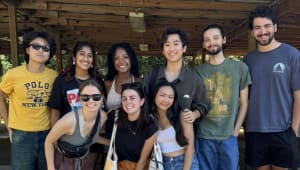
Support MD Student ASLA to Get to LABash!
By Ellie Dugan
SASLA promotes responsible environmental stewardship and thoughtful, artful landscape design
SASLA promotes responsible environmental stewardship and thoughtful, artful landscape design <strong>About Us</strong>
As the <strong>University of Maryland Student Chapter of the American Society of Landscape Architects (SASLA)</strong>, our mission is to lead, educate, and participate in the careful stewardship, wise planning, and artful design of our cultural and natural environments. We strive to create a sense of community within the landscape architecture department and provide professional and academic resources for students.
<em>Students recognize Park(ing) Day 2025!</em>
<strong>What is LABash?</strong>
<strong>LABash</strong> is an annual student-run Landscape Architecture conference hosted annually since 1970. LABash 2026 will take place at the Ohio State University from March 11th to March 13th, 2026. The three-day conference features lectures from professors and professionals, design workshops, charrettes, and ample networking opportunities. Specialized workshops allow students to expand upon their skill set and prepare them to enter the professional force. Additionally, the conference is a great opportunity for students to become involved in the landscape architecture community by meeting both students and professionals! Many students have maintained friendships and professional relationships with people they met at LABash. <a href="https://www.labash.org/">Click here</a> to learn more.
<em>Students at LABash 2025, hosted by the University of Guelph in Canada!</em>
<strong>Why Contribute?</strong>
Your donation can help change students’ lives and kickstart their careers! In the past, SASLA members have walked away from the conference with internship offers and countless networking contacts, but most importantly a renewed drive and spirit to succeed. Contributing to our project will help SASLA continue to fulfill our mission providing opportunities for self-development! Donations will go toward funding travel, lodging, and registration expenses for students who would like to attend.
<em>Students at LABash 2024, hosted by the University of California, Davis!</em>
<em>Gifts in support of the University of Maryland are accepted and managed by the University of Maryland College Park Foundation, Inc., an affiliated 501(c)(3) organization authorized by the Board of Regents. Contributions to the University of Maryland are tax deductible as allowed by law. Please see your tax advisor for details.</em>
104%
Funded
19
Donors
0
days
left
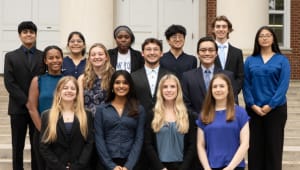
Team Bionic
By Briana Gonzalez
Team Bionic aims to design a study that simulates the use of an upper-limb myoelectric prosthesis in combination with additional sensory feedback.
Team Bionic aims to design a study that simulates the use of an upper-limb myoelectric prosthesis in combination with additional sensory feedback. <strong>About Us</strong>
Team Bionic, a group of undergraduate researchers in the Gemstone Honors program, aims to design a study that simulates the use of an upper-limb myoelectric prosthesis in combination with additional sensory feedback, tracking performance, and mental workload across repeated trials to identify strategies that can shorten the learning curve and improve long-term usability.
<strong>Our Mission</strong>
There is currently limited research on how the learning curve, mental workload, and self-efficacy influence a person’s progress during prosthesis training. Our goal is to analyze how such metrics evolve during the different phases of our study and to identify ways to make learning prosthetic control easier and more natural for the user. Furthermore, we hope to advance the research and use this simulation-based training as a tool to expand accessible training opportunities for prosthetic users.
<strong></strong>
<strong>Why it matters</strong>
Although a range of upper-limb prostheses exists for amputees, the complexity of the human hand and the lack of intuitive control remain major factors affecting whether long-term adoption and consistent usage are a possibility. Myoelectric prostheses, while offering more degrees of freedom, often present challenges such as high mental workload and difficulties with intuitive control, leading to high abandonment rates.
Additionally, access to advanced prosthetic care is still limited by the cost of rehabilitation, the distance from the patient, and other barriers that prevent users from achieving an intuitive and comfortable prosthesis.
Through this work, we hope to reduce those obstacles that lead to prosthesis abandonment and enhance the quality of life and long-term prosthesis use of individuals with limb loss.
<strong>Timeline</strong>
<strong></strong>
<strong>Want to find out more about Team Bionic?</strong><strong> </strong>
Visit our website at <a href="https://umcp.my.canva.site/team-bionic-gemstone">https://umcp.my.canva.site/team-bionic-gemstone</a>
Follow us on Instagram: <a href="https://www.instagram.com/gemsbionic/">@gemsbionic</a>
<strong>Have further questions? Don’t hesitate to contact us</strong>
Email: <a href="mailto:bionic.gems.umd@gmail.com">bionic.gems.umd@gmail.com</a>
Phone number: (202) 709-8547
<em>Gifts in support of the University of Maryland are accepted and managed by the University of Maryland College Park Foundation, Inc., an affiliated 501(c)(3) organization authorized by the Board of Regents. Contributions to the University of Maryland are tax-deductible as allowed by law. Please see your tax advisor for details.</em>
33%
Funded
55
Donors
0
days
left

Support TEAM OARS for Giving Day
By University of Maryland
Our team built a prototype autonomous lifeboat equipped with machine vision and thermal cameras.
Our team built a prototype autonomous lifeboat equipped with machine vision and thermal cameras. <strong>WHO ARE WE? </strong>
We are Team OARS, a group with one goal - to innovate. Our team consists of 11 passionate students studying various engineering and computer science disciplines. We are here to make our mark on the university before we all graduate in May 2026.
<strong>WE NEED YOUR HELP! </strong>
During the remainder of the Spring 2026 semester, our objective is to test a prototype of an autonomous unmanned surface vehicle (USV) - an autonomous boat - in the Neutral Buoyancy Research Facility and in more complex bodies of water to assist in rescue operations in stormy weather conditions. We aim to raise $500 to fund our testing.
<em>Gifts in support of the University of Maryland are accepted and managed by the University of Maryland College Park Foundation, Inc., an affiliated 501(c)(3) organization authorized by the Board of Regents. Contributions to the University of Maryland are tax-deductible as allowed by law. Please see your tax advisor for details.</em>
65%
Funded
5
Donors
0
days
left

Support Team HEMD
By University of Maryland
Team HEMD is working on an ingestible capsule that will use the energy in the body to generate power in order to remove the batteries from the devices.
Team HEMD is working on an ingestible capsule that will use the energy in the body to generate power in order to remove the batteries from the devices. <strong>OUR MISSION</strong>
We aim to <strong>identify</strong>, <strong>develop</strong>, and <strong>design</strong> an ingestible medical device that harvests mechanical and chemical energy from the gastrointestinal tract in order to power a capsule for a medical application. Harvesting energy from within the body prolongs the lifetime of the capsule and eliminates the reliance on using potentially dangerous lithium batteries within the body in ingestible capsules, allowing for an expansion of applications and use. By developing our device for long-term use, we aim to power real-time diagnoses, monitoring, or treatment of gastrointestinal diseases like IBS and IBD.
<strong>ABOUT US</strong>
We are an undergraduate research team, consisting of students in bioengineering, electrical engineering, civil engineering, and chemistry in the Gemstone Honors Program at the University of Maryland, College Park. We are motivated by technology as a means of improvement in medical devices, as we desire to improve the state of ingestible capsules as they are to power more advanced and beneficial uses. We are grateful to have the expertise and support of Dr. Reza Ghodssi of the Department of Electrical and Computer Engineering and Fischell Institute for Biomedical Devices here at the University of Maryland, whose research spans MEMS sensors and actuators in micro-nano-bioengineering, as well as Ms. Isabella Baxter, our team librarian.
<strong></strong>
<strong>YOUR SUPPORT MAKES A DIFFERENCE</strong>
We need your help in funding our research so that we can effectively design, prototype, and test in order to accomplish our mission and contribute to the field of ingestible medical device research.
<strong>CONTACT US</strong>
@teamhemd on Instagram or visit our website: <a href="https://teamhemd.weebly.com/">Team HEMD - Home</a>
<em>Gifts in support of the University of Maryland are accepted and managed by the University of Maryland College Park Foundation, Inc., an affiliated 501(c)(3) organization authorized by the Board of Regents. Contributions to the University of Maryland are tax deductible as allowed by law. Please see your tax advisor for details.</em>
11%
Funded
6
Donors
0
days
left

Sea-Turtle-Inspired Unmanned Underwater Vehicle (UUV)- Team HYDRA
By University of Maryland
Team HYDRA in the Gemstone Honors College will enable localized, high-resolution mapping of seagrass productivity to distinguish healthy and depleted areas
Team HYDRA in the Gemstone Honors College will enable localized, high-resolution mapping of seagrass productivity to distinguish healthy and depleted areas <strong>About Us</strong>
We, Team HYDRA, are a team of nine interdisciplinary students brought together through the Gemstone Honors Program because of our shared interest in biomimicry, robotics, and marine conservation. Under the guidance of our faculty mentor, Dr. Cecilia Huertas-Cerdeira from the Department of Mechanical Engineering, we are designing and building a soft-bodied sea turtle robot to monitor seagrass bed health in the Chesapeake Bay without causing damage to the ecosystem.
<strong>Our Aim</strong>
Our team spans multiple disciplines: mechanical engineering, bioengineering, cell biology and genetics, kinesiology, microbiology, chemistry, mathematics, and physics. We're developing a sea turtle-inspired underwater vehicle with soft, flexible flippers and integrated sensors. Our goal is to measure seagrass productivity by tracking oxygen production, which indicates ecosystem health, all while minimizing environmental disturbance.
<strong>Our Why</strong>
Seagrass beds in the Chesapeake Bay are declining, yet they play a critical role in supporting biodiversity, stabilizing shorelines, and sequestering carbon. Current monitoring methods are problematic. Divers have safety concerns and limited coverage, while conventional robots create noise pollution, disturb sediment, risk entanglement in vegetation, and damage seagrass with rigid components. We believe monitoring technology should work in harmony with nature rather than against it.
<strong>So... Why Help Us?</strong>
Current methods cannot effectively measure seagrass productivity because existing monitoring methods damage the habitat we're trying to assess. Our solution is a soft robot that mimics sea turtle locomotion, a species naturally adapted to seagrass environments. Our underwater vehicle will integrate multiple sensors: a dissolved oxygen sensor for direct measurements, a hydrophone to detect oxygen bubbles from photosynthesis, and an underwater camera for species and environmental documentation. This multi-sensor approach captures both dissolved and gaseous oxygen data simultaneously which is information currently widely unavailable.
We're also advancing soft robotics by optimizing flipper design to maximize efficiency and thrust while minimizing sediment disturbance. Our research will provide design principles for future bio-inspired systems and give conservation organizations an effective, non-invasive monitoring tool. We need community support to fund materials, computational modeling, water tank testing, and fabrication as we move from simulation through prototype development to field deployment in the Chesapeake Bay.
Together, we can demonstrate that effective environmental monitoring is possible without ecological cost!
<strong>Stay Connected!</strong>
Instagram: @teamhydra2028
Email: teamhydra.gems@gmail.com
Website: <a href="https://teamhydra2028.weebly.com/">https://teamhydra2028.weebly.com/</a>
<em>Gifts in support of the University of Maryland are accepted and managed by the University of Maryland College Park Foundation, Inc., an affiliated 501(c)(3) organization authorized by the Board of Regents. Contributions to the University of Maryland are tax-deductible as allowed by law. Please see your tax advisor for details.</em>
5%
Funded
1
Donors
0
days
left

Support Team FIREHOSE
By University of Maryland
Our objective is to help firefighters by adding to this under-researched area of kickback force reactions by developing our own equation.
Our objective is to help firefighters by adding to this under-researched area of kickback force reactions by developing our own equation. We are a multidisciplinary engineering team focused on optimizing the mathematical model that predicts firehose nozzle kickback reaction forces, as well as developing a way to track kickback forces for firefighting training. Our objective is to refine the governing fluid dynamics formula to improve accuracy, stability, and real-world applicability. By integrating principles from fluid mechanics, applied mathematics, along with testing our theory with our own experiment, we look to optimize a formula that has not been agreed upon by experts in the field, and then use this equation to guide us in developing a way to track these forces. Through our experiments and research, we aim to enhance firefighter safety, improve the understanding of an under-researched field, as well as help aid the firefighting training process.
<em>Gifts in support of the University of Maryland are accepted and managed by the University of Maryland College Park Foundation, Inc., an affiliated 501(c)(3) organization authorized by the Board of Regents. Contributions to the University of Maryland are tax-deductible as allowed by law. Please see your tax advisor for details.</em>
77%
Funded
30
Donors
0
days
left

Team BATTLE
By University of Maryland
Team BATTLE is a GEMSTONE research project dedicated to developing an AI model that will use bacteriophages.
Team BATTLE is a GEMSTONE research project dedicated to developing an AI model that will use bacteriophages. <strong>Instagram:</strong> @gemsteambattle
<strong>Introduction:</strong>
Around the world, bacteria are becoming increasingly resistant to antibiotics, contributing to millions of deaths each year. Team BATTLE is exploring bacteriophages (phages) -- viruses that infect bacteria -- as a potential alternative to traditional antibiotics for treating infections caused by antibiotic-resistant bacteria.
<strong>About US:</strong>
We are a team of 13 undergraduate students in the Gemstone Honors Program. With guidance from our faculty mentors, Dr. Weitz and Dr. Dickey, we combine experimental and computational approaches to match phages with bacterial hosts for more effective treatment strategies. Our long-term goal is to build a closed-loop, active-learning pipeline in which a computational model predicts phage-host interaction outcomes and our lab team validates those predictions experimentally, feeding results back into the model to continuously improve performance.
<strong>Timeline:</strong>
<strong>Objective:</strong>
Over the next three years, our goal is to implement a closed-loop, adaptive learning pipeline to develop a system of computational models that can accurately match phages to bacterial hosts and ultimately improve the speed at which phage-based treatments can be prepared. Achieving this will require many time - and material-intensive laboratory experiments, along with significant computational resources. Access to the Zaratan HPC cluster will provide the computing power needed to build and run our model, while our wet - lab work depends on supplies and consumables that add up quickly.
These materials are costly, but with your support, we can secure what we need to launch our pipeline and work toward a future where fewer people die from antibiotic-resistant infections. We aim to raise $2,500 to begin purchasing essential supplies, train our experimental team, and enable our computational team to start building and testing the model.
<em>Gifts in support of the University of Maryland are accepted and managed by the University of Maryland College Park Foundation, Inc., an affiliated 501(c)(3) organization authorized by the Board of Regents. Contributions to the University of Maryland are tax-deductible as allowed by law. Please see your tax advisor for details.</em>
100%
Funded
52
Donors
0
days
left

Support Team SNAPS
By University of Maryland
We are researching the resilience of intrinsically photosensitive retinal ganglion cells (ipRGCs).
We are researching the resilience of intrinsically photosensitive retinal ganglion cells (ipRGCs). <strong>Website: <a href="https://gemstonesnaps.web.app/">SNAPS - Gemstone Research Team</a> </strong>
<strong>Instagram:</strong> @team.snaps <strong></strong><strong>Introduction:</strong>
Glaucoma is one of the leading causes of irreversible blindness, affecting millions of people worldwide. Current treatments can slow the disease, but they cannot restore vision once it is lost. Our team aims to help change the current state of research by investigating why certain eye cells survive glaucoma and how this knowledge could guide the development of future vision-protecting therapies.
<strong>About Us:</strong>We are a group of 11 sophomore undergraduate students in the Gemstone Honors Program. We are researching the resilience of intrinsically photosensitive retinal ganglion cells (ipRGCs) to better understand why some of these cells survive glaucomatous damage. Our goal is to identify genetic and cellular factors that could lead to new therapeutic strategies aimed at preserving vision and slowing the progression of glaucoma.
<strong>Our Timeline:</strong>
<strong>Our Objective</strong>:Over the next three years, our goal is to better understand why certain cells in the eye survive glaucoma and use this knowledge to aid in guiding the development of new, vision-protecting treatments. This work requires specialized equipment, laboratory materials, and long hours of experimentation that resources we can only secure with your support. We aim to raise $2,000 to begin purchasing the materials needed for our first stages of research.
By donating to our campaign, you will be directly supporting efforts to advance the field of glaucoma research and vision-restoring therapies, helping move us closer to safer, more effective options for preventing vision loss in millions of people worldwide.
<em>Gifts in support of the University of Maryland are accepted and managed by the University of Maryland College Park Foundation, Inc., an affiliated 501(c)(3) organization authorized by the Board of Regents. Contributions to the University of Maryland are tax-deductible as allowed by law. Please see your tax advisor for details.</em>
12%
Funded
4
Donors
0
days
left