

Description
Our Research. Our Environment. Our Impact.
Coastal communities and agricultural areas are experiencing increasing environmental changes as rising sea levels and saltwater intrusion affect the land around them. On Maryland's Eastern Shore, saltwater intrusion is an important concern because it can change soil conditions and potentially affect the way soils store and process organic matter. Despite the importance of healthy soils to our environment and agricultural systems, there is still much to understand about how increasing soil salinity influences soil organic matter.
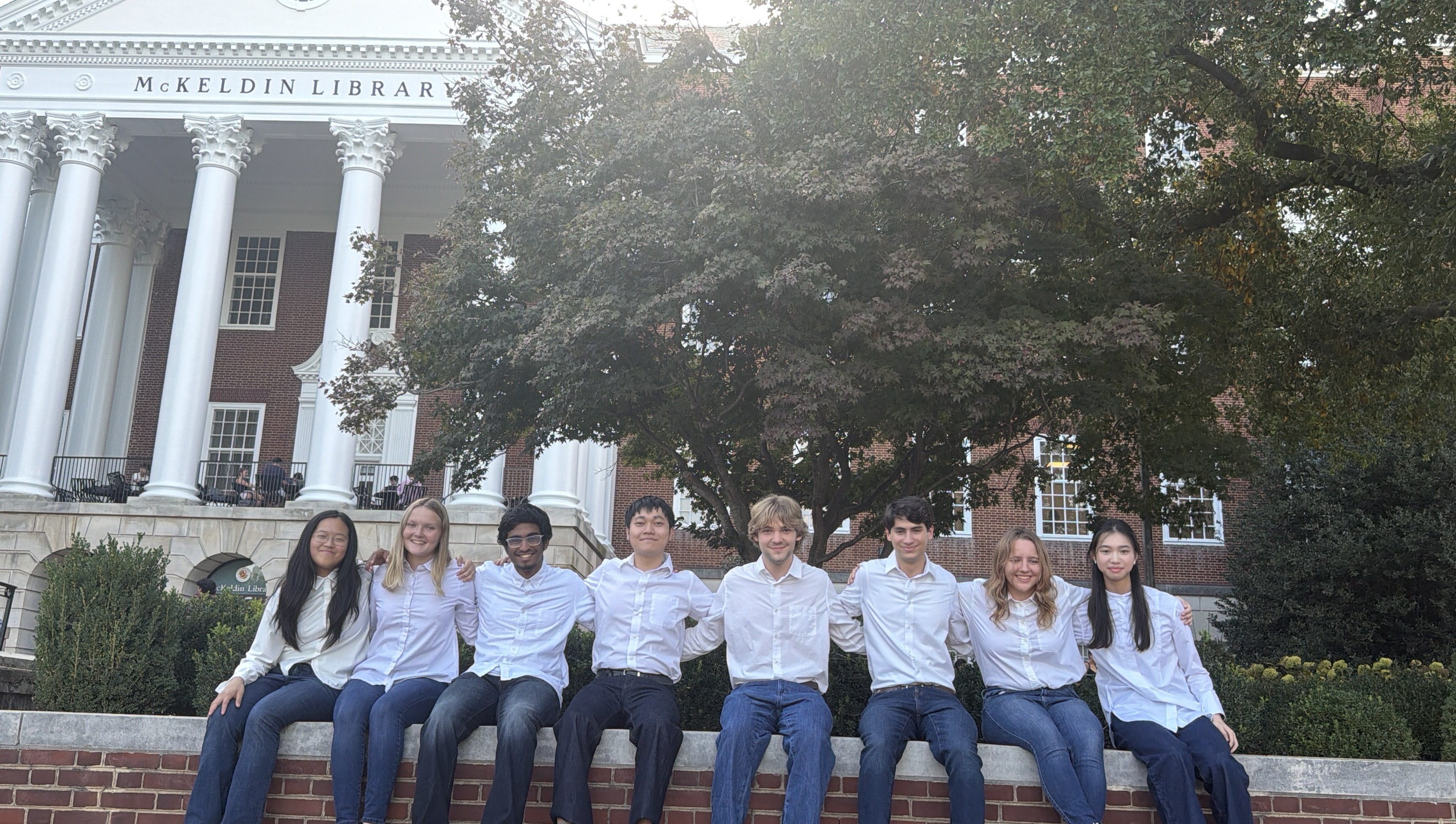
We are Team SOIL, an undergraduate research group at the University of Maryland participating in the Gemstone Honors Program. Our research focuses on understanding the relationship between saltwater intrusion and soil organic matter, particularly in agricultural areas of Maryland's Eastern Shore.
Why Does Our Research Matter?
Soil organic matter plays an important role in environmental processes, particularly soil health, nutrient cycling, and carbon storage. Healthy soils help support agricultural productivity and contribute to important ecosystem functions. However, when saltwater enters agricultural soils, it changes the soil's chemical environment and may influence the amount, composition, and behavior of organic matter.
As sea levels rise and coastal flooding becomes an increasing concern, understanding these changes is becoming more important. Saltwater intrusion can affect agricultural land, coastal ecosystems, and the environmental processes that take place beneath the surface. By studying the relationship between salinity and soil organic matter, our team hopes to contribute to a better understanding of these environmental changes. Understanding how salt water changes soil organic carbon can ultimately help researchers devise ways to mitigate environmental impacts, such as CO2 sequestration.
What Are We Doing?
Our team is investigating soil samples to better understand how saltwater intrusion may influence soil organic matter. This involves collecting soil samples, preparing them for laboratory analysis, and examining their organic matter characteristics.
Our research requires several important steps, including traveling to field locations on Maryland's Eastern Shore, collecting and organizing soil samples, preparing samples for analysis, and using specialized laboratory equipment and testing methods. We are also working to understand the different properties of soil organic matter and how they may change under varying salinity conditions.
Through this process, we hope to develop a clearer picture of how saltwater intrusion affects soil organic matter dynamics and contribute to the growing body of research surrounding coastal environmental change.
How Can You Help?
Conducting undergraduate research requires time, materials, transportation, and laboratory resources. Your support will help our team purchase essential research supplies, including protective gloves, soil sample containers, collection materials, and specialized laboratory filtration supplies. Donations will also help cover the costs of traveling to research locations and analyzing collected soil samples.
Every contribution, regardless of size, helps our team move forward. Whether you choose to make a small donation or provide a larger contribution, your support directly helps us continue our research and investigate an important environmental issue affecting Maryland.
Be Part of Our Research Journey
By supporting Team SOIL, you are helping undergraduate researchers investigate the effects of saltwater intrusion on soil organic matter and contribute to a better understanding of Maryland's changing coastal environment.
Our goal is not only to learn more about what is happening to these soils today, but also to contribute research that can help inform future environmental and agricultural studies.
Thank you for supporting Team SOIL, the University of Maryland Gemstone Program, and undergraduate environmental research. Every contribution makes a difference!
Gifts in support of the University of Maryland are accepted and managed by the University of Maryland College Park Foundation, Inc., an affiliated 501(c)(3) organization authorized by the Board of Regents. Contributions to the University of Maryland are tax-deductible as allowed by law. Please see your tax advisor for details.
$10
Bronze Tier
Helps provide protective gloves for safely handling soil samples and research materials.
$25
Silver Tier
Helps cover the cost of analyzing soil samples to better understand soil organic matter.
$50
Gold Tier
Helps support transportation for field trips to collect soil samples from Maryland's Eastern Shore.
$75
Platinum Tier
Helps provide soil sample containers, labels, and other collection materials.
$100
Diamond Tier
Helps purchase laboratory filtration supplies used to prepare soil samples for dissolved organic matter analysis.