
$11,240
Amount Raised
237
Gifts Received
Projects
11 Projects
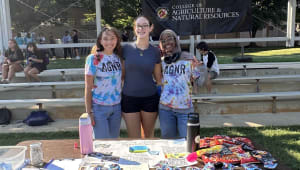
Support MD Student ASLA to Get to LABash 2026!
By Stephanie Cavanaugh
LABash is a student-run conference that has been hosted annually since 1970. This year, it will take place in Columbus, Ohio from March 12th-15th, 2026.
LABash is a student-run conference that has been hosted annually since 1970. This year, it will take place in Columbus, Ohio from March 12th-15th, 2026. About Us As the University of Maryland Student Chapter of the American Society of Landscape Architects (SASLA), our mission is to lead, educate, and participate in the careful stewardship, wise planning, and artful design of our cultural and natural environments. We strive to create a sense of community within the landscape architecture department and provide professional and academic resources for students. Students recognize the importance of Parking Day 2025! What is LABash? LABash is an annual student-run Landscape Architecture conference hosted annually since 1970. LABash 2026 will take place at the University of Ohio in Columbus from March 11th - March 13th, 2025. The three-day conference features lectures from professors and professionals, design workshops, charrettes, and ample networking opportunities. Specialized workshops allow students to expand upon their skill set and prepare them to enter the professional force. Additionally, the conference is a great opportunity for students to become involved in the landscape architecture community by meeting both students and professionals! Many students have maintained friendships and professional relationships with people they met at LABash. Click here to learn more. Students at LABash 2025, hosted by the University of Guelph in Canada! Why Contribute? Your donation can help change students’ lives and kickstart their careers! In the past, SASLA members have walked away from the conference with internship offers and countless networking contacts, but most importantly a renewed drive and spirit to succeed. Contributing to our project will help SASLA continue to fulfill our mission providing opportunities for self-development! Donations will go toward funding travel, lodging, and registration expenses for students who would like to attend. Students at LABash 2024, hosted by the University of California, Davis! Gifts in support of the University of Maryland are accepted and managed by the University of Maryland College Park Foundation, Inc., an affiliated 501(c)(3) organization authorized by the Board of Regents. Contributions to the University of Maryland are tax deductible as allowed by law. Please see your tax advisor for details.
7%
Funded
10
Donors
0
days
left
Help Students Create Community Garden in Guatemala
By University of Maryland
We strive to provide opportunities for students and agricultural workers to collaborate with international NGOs on improving sustainable agriculture practices.
We strive to provide opportunities for students and agricultural workers to collaborate with international NGOs on improving sustainable agriculture practices. About Us The mission of Terps for International Agriculture Science Club (TIAS) is to collectively improve food security, reduce malnutrition, and increase collective knowledge between global entities. We strive to provide opportunities for students and other agricultural workers to collaborate with international NGOs on improving sustainable agriculture practices. We regularly communicate with students and organizations virtually, but there is so much more we can learn in person! Community Garden Project TIAS has the opportunity to transform raw land that has been vandalized into a community garden. The land is located in El Ampero, in the San Marcos Department of Guatemala, which is in the highlands and experiences a tropical savanna climate. Our goal is to collaborate with the owners of the land and experienced Guatemalan farmers to grow crops, install a water pump for irrigation, and establish a composting system. The project will provide us with opportunities to grow in communication, leadership, planning, and advocacy. We aim to support Guatemalan farmers who face challenges related to climate change, economic constraints, limited government support, and food insecurity. El Amparo, Guatemala is a region characterized by wet and dry seasons. The climate supports the growth of crops such as sugarcane, coffee, bananas, avocados, and vegetables. We look forward to learning about how local farmers face challenges related to climate change, economic constraints, and food security (satellite image from Google Maps). Why Contribute? Your donation will help UMD students put knowledge into practice. As a developing club, TIAS has focused primarily on online and classroom-based education and has not been able to gain practical skills in sustainable agriculture. There is a limit on how much we can learn about another country online. Only by experiencing local farming and land development in Guatemala can we understand how sustainable agriculture can be practiced in a location with fewer resources available than our own. Your contribution will support the local community as neighbors gather together to care for the garden and produce crops like coffee, corn, and avocados, improving economic stability and reducing malnutrition. Additionally, this is the first step to future construction of a school on the property, encouraging sustainable agriculture education for the youth. Donations will go towards travel, lodging, supplies, and assistance from Guatemalan farmers. Gifts in support of the University of Maryland are accepted and managed by the University of Maryland College Park Foundation, Inc., an affiliated 501(c)(3) organization authorized by the Board of Regents. Contributions to the University of Maryland are tax-deductible as allowed by law. Please see your tax advisor for details.
0%
Funded
1
Donors
0
days
left

Tokens for Tack
By University of Maryland
We are a student run organization, focused on horsemanship and equine education.
We are a student run organization, focused on horsemanship and equine education. About Us The Maryland Equestrian Club (MEC) is an on-campus organization that brings together student equestrians through a shared love of horses. We are unique among the many other animal-based clubs as we provide riding opportunities with our horses on the farm to students at more affordable prices than they would find elsewhere. As a team, we contribute hours out of our weekly schedules to care for all the horses on the campus farm. Every day, our members spend at least 3 hours on the farm for feeding and grooming, and most days spend another 2 hours in lessons. MEC is a great way for Animal Science students, or anyone interested in horses, to gain experience under saddle and on the ground. Our horses must be safe to ride— many of our members are new to working with them, and we want this club to give them the best experience possible. The Dilemma In these past few years, we have gained three horses and lost two to retirement and injury. With these new additions, our costs have increased to accommodate new feeds, saddle fittings, vet bills, and equipment. We are looking to raise money to help ease these new horses through the transition to our barn. With smooth transitions, we can continue to help our riders reach new milestones. Finding horses that can meet the skillset and safety requirements of our riders is imperative. By facilitating these introductions, we can hope to incorporate them into the riding schedule quickly. Our goal is to raise funds to integrate our new equine members efficiently and smoothly! Our Goal We would greatly appreciate your support, since maintaining and transitioning new horses is financially challenging. Our current lesson rockstars are showcased! Launch this year We are incredibly grateful to our previous donors, as they allowed us to welcome Random, Jerry, and Dawn to our herd. You have made a difference! Thank you Even if you can't donate right now, we appreciate you taking the time to look through our page. Other ways to make an impact could involve sharing this campaign by posting on social media under the hashtag #MECRidingHorseFundraiser, checking out our Instagram account @marylandequestrianclub, or telling your friends and family! Gifts in support of the University of Maryland are accepted and managed by the University of Maryland College Park Foundation, Inc., an affiliated 501(c)(3) organization authorized by the Board of Regents. Contributions to the University of Maryland are tax-deductible as allowed by law. Please see your tax advisor for details.
19%
Funded
14
Donors
0
days
left

Team RUBIX
By University of Maryland
Team RUBIX will design, construct, and launch a spherical nano-satellite into low earth orbit for the purpose of studying atmospheric drag and space weather.
Team RUBIX will design, construct, and launch a spherical nano-satellite into low earth orbit for the purpose of studying atmospheric drag and space weather. Whether it's for checking the weather, getting to work, ordering food, or watching TV, satellites play a fundamental role in our modern way of life. However, the dangerous effects of space weather, coupled with the recent exponential growth in the number of satellites, threaten the critical functions that these satellites perform. This is why we at Team RUBIX, an undergraduate research group within the Gemstone Honors College, plan to build a small satellite capable of measuring upper-atmospheric conditions. A successful design would lay the foundation for a future network of atmospheric space-weather buoys. This network would provide satellite operators with the real-time data they need to protect the vital systems all of us depend on every day. Our design will consist of a 1 to 3 unit CubeSat, which corresponds to a side length of 10 - 30 cm. Its key innovation is a system that uses foam to inflate into a near spherical shape after launch. The spherical design allows for simplified measurements and more precise data. The inflatable design maintains the scalable aspects of traditional CubeSats, unlike rigid-shell spherical satellites which are expensive and complicated to launch. Past inflatable CubeSats have always relied on gas to expand, making our CubeSat the first of its kind. This pioneering approach has the potential to be more reliable and cheaper than previous satellites used to calibrate atmospheric models. In order to turn this design into reality, we are asking for your support. Your donation today will directly fund the critical components of our prototype, helping us take the first crucial step in safeguarding our satellite-dependent world. Donate now to be a part of this groundbreaking mission! Gifts in support of the University of Maryland are accepted and managed by the University of Maryland College Park Foundation, Inc., an affiliated 501(c)(3) organization authorized by the Board of Regents. Contributions to the University of Maryland are tax-deductible as allowed by law. Please see your tax advisor for details.
67%
Funded
143
Donors
0
days
left

Team FET:US 2025
By University of Maryland
Team FET:US is studying the risks of plastic chemical exposure during pregnancy.
Team FET:US is studying the risks of plastic chemical exposure during pregnancy. Team FET:US is an all-women undergraduate research team from the Gemstone Honors program of the University of Maryland, studying the risks of plastic chemical exposure during pregnancy. We are seeking support to fund essential research materials, including lab equipment and chemicals, to continue our work. Your contribution will help us advance this important study, which could inform public health policies and promote safer alternatives to harmful chemicals. Join us in advancing women's health and supporting the next generation of women scientists! Specifically, we are focused on Di-isononyl phthalate (DiNP), a common plasticizer used to make plastics more durable and flexible, and its potential effects on placental and fetal development. Around 2002, DiNP started to gain prominence as it was used to replace a different plasticizer, DEHP, which was banned in many places across the globe due to safety concerns. However, it is now known that DiNP is not much safer than its precursor, yet it is still being used continuously. By examining how DiNP exposure impacts both the mother and fetus, our research aims to provide critical insights into the health risks posed by everyday chemicals found in products like food packaging and medical devices. Our research, although very specific, will contribute to the ultimate puzzle of what phthalates are doing across the world. Together, we can pave the way for safer environments and healthier futures for all. IG: @teamfetus.gems Website: go.umd.edu/teamfetus Email: teamfetus26@gmail.com Gifts in support of the University of Maryland are accepted and managed by the University of Maryland College Park Foundation, Inc., an affiliated 501(c)(3) organization authorized by the Board of Regents. Contributions to the University of Maryland are tax-deductible as allowed by law. Please see your tax advisor for details.
0%
Funded
2
Donors
0
days
left

Analyzing Groundwater for Agriculture (AGWA)
By University of Maryland
To gain an understanding of saltwater intrusion and how it'll progress in Maryland to help farmers make data-based decisions about their land and water use.
To gain an understanding of saltwater intrusion and how it'll progress in Maryland to help farmers make data-based decisions about their land and water use. Help us fund our research project about saltwater intrusion in Maryland! As weather patterns have changed and sea levels have risen, saltwater intrusion has become a major threat to the future of Maryland agriculture with effects ranging from reduced yield to complete land retirement. We seek to analyze and predict the effect of saltwater intrusion on cropland, and investigate the impact it will have on Maryland’s economy. In order to achieve this, we will need to learn about the interests of stakeholders such as farmers, build a model to predict saltwater intrusion and soil salinization in Maryland cropland, and build a public-facing tool that will allow the community to learn about the predicted spread of saltwater intrusion and its economic impact. We are Team AGWA, a group of motivated students in the Gemstone Honors College pursuing degrees in computer science, agricultural economics, public policy, and more. We want to put our diverse interests together to work on an emerging, real-world problem, and we can only do it with your help. Learn more about us at our website: https://gemstoneteamagwa.wixsite.com/agwa Gifts in support of the University of Maryland are accepted and managed by the University of Maryland College Park Foundation, Inc., an affiliated 501(c)(3) organization authorized by the Board of Regents. Contributions to the University of Maryland are tax-deductible as allowed by law. Please see your tax advisor for details.
24%
Funded
8
Donors
0
days
left

Team REVISE
By University of Maryland
This proposed project aims to translate the DSM-5-TR diagnostic criteria into practical, interdisciplinary treatment guides.
This proposed project aims to translate the DSM-5-TR diagnostic criteria into practical, interdisciplinary treatment guides. The DSM-5-TR, published by the American Psychiatric Association, is the global standard for diagnosing mental health disorders. While it offers clear criteria and a shared clinical language, its focus remains on classification rather than individualized care. This project aims to address that gap by reimagining how DSM-5-TR criteria, specifically for trauma and stress-related disorders, can inform interdisciplinary, patient-centered treatment. By translating diagnostic criteria into practical guides that consider age, culture, neurodiversity, and comorbidity, the goal is to move beyond labels toward more effective, ethical, and personalized mental health care. Gifts in support of the University of Maryland are accepted and managed by the University of Maryland College Park Foundation, Inc., an affiliated 501(c)(3) organization authorized by the Board of Regents. Contributions to the University of Maryland are tax deductible as allowed by law. Please see your tax advisor for details.
38%
Funded
11
Donors
0
days
left

Team VISTA
By University of Maryland
This project will reduce barriers to high-quality investigative education by allowing students to learn and experiment with cutting-edge equipment.
This project will reduce barriers to high-quality investigative education by allowing students to learn and experiment with cutting-edge equipment. Our Mission: Team VISTA is a multidisciplinary undergraduate research team within the Gemstone Honors College. Under the mentorship of Dr. Xin Zan, an Assistant Professor at the University of Maryland Electrical and Computer Engineering Department, we aim to develop a remotely manipulated lab system that students can access via the Internet, enabling them to perform real-time experiments on actual physical cutting-edge electrical engineering equipment housed at the University of Maryland, College Park. This platform will provide access to advanced equipment worth tens of thousands of dollars to far more students. This blended learning solution is intended to benefit students, particularly those who are disabled, low-income, or attend schools with limited resources, ensuring financial and physical limitations are not barriers to STEM education. You explore our project further and see our current demo here: https://gems-vista.github.io/VISTA-website/index.html#about. Our Timeline: All donated funds will be used to purchase necessary lab equipment, analysis tools, and future research conferences. In addition, your donations will enable us to share our research with various academic institutions. We thank you for your continued support of Team VISTA! Gifts in support of the University of Maryland are accepted and managed by the University of Maryland College Park Foundation, Inc., an affiliated 501(c)(3) organization authorized by the Board of Regents. Contributions to the University of Maryland are tax deductible as allowed by law. Please see your tax advisor for details.
68%
Funded
6
Donors
0
days
left

Team HYDRA
By University of Maryland
Team HYDRA is a nine-person interdisciplinary research team within the Gemstone Honors Program at the University of Maryland.
Team HYDRA is a nine-person interdisciplinary research team within the Gemstone Honors Program at the University of Maryland. About Us We, Team HYDRA, are a team of nine interdisciplinary students brought together through the Gemstone Honors Program because of our shared interest in biomimicry, robotics, and marine conservation. Under the guidance of our faculty mentor, Dr. Cecilia Huertas-Cerdeira from the Department of Mechanical Engineering, we are designing and building a soft-bodied sea turtle robot to monitor seagrass bed health in the Chesapeake Bay without causing damage to the ecosystem. Our Aim Our team spans multiple disciplines: mechanical engineering, bioengineering, cell biology and genetics, kinesiology, microbiology, chemistry, mathematics, and physics. We're developing a sea turtle-inspired underwater vehicle with soft, flexible flippers and integrated sensors. Our goal is to measure seagrass productivity by tracking oxygen production, which indicates ecosystem health, all while minimizing environmental disturbance. Our Why Seagrass beds in the Chesapeake Bay are declining, yet they play a critical role in supporting biodiversity, stabilizing shorelines, and sequestering carbon. Current monitoring methods are problematic. Divers have safety concerns and limited coverage, while conventional robots create noise pollution, disturb sediment, risk entanglement in vegetation, and damage seagrass with rigid components. We believe monitoring technology should work in harmony with nature rather than against it. So... Why Help Us? Current methods cannot effectively measure seagrass productivity because existing monitoring methods damage the habitat we're trying to assess. Our solution is a soft robot that mimics sea turtle locomotion, a species naturally adapted to seagrass environments. Our underwater vehicle will integrate multiple sensors: a dissolved oxygen sensor for direct measurements, a hydrophone to detect oxygen bubbles from photosynthesis, and an underwater camera for species and environmental documentation. This multi-sensor approach captures both dissolved and gaseous oxygen data simultaneously which is information currently widely unavailable. We're also advancing soft robotics by optimizing flipper design to maximize efficiency and thrust while minimizing sediment disturbance. Our research will provide design principles for future bio-inspired systems and give conservation organizations an effective, non-invasive monitoring tool. We need community support to fund materials, computational modeling, water tank testing, and fabrication as we move from simulation through prototype development to field deployment in the Chesapeake Bay. Together, we can demonstrate that effective environmental monitoring is possible without ecological cost! Stay Connected! Instagram: @teamhydra2028 Email: teamhydra.gems@gmail.com Website: https://teamhydra2028.weebly.com/ Gifts in support of the University of Maryland are accepted and managed by the University of Maryland College Park Foundation, Inc., an affiliated 501(c)(3) organization authorized by the Board of Regents. Contributions to the University of Maryland are tax-deductible as allowed by law. Please see your tax advisor for details.
40%
Funded
11
Donors
0
days
left

Team CREST
By University of Maryland
Team CREST is working to advance wave energy conversion, a promising but underdeveloped source of clean power.
Team CREST is working to advance wave energy conversion, a promising but underdeveloped source of clean power. This project investigates the impact of riblet-style surface textures on the performance and survivability of Wells turbine blades within Oscillating Water Column wave energy systems. While previous studies suggest that riblets may improve efficiency, these findings mostly come from computational models and have never been experimentally validated. Our work will build physical turbine blades with and without riblets, test their performance in controlled airflow, and then expose them to environmental stressors to evaluate long-term survivability. By assessing both efficiency and survivability, this project aims to determine whether riblets are a viable design improvement for future turbine-type wave energy converters. Gifts in support of the University of Maryland are accepted and managed by the University of Maryland College Park Foundation, Inc., an affiliated 501(c)(3) organization authorized by the Board of Regents. Contributions to the University of Maryland are tax-deductible as allowed by law. Please see your tax advisor for details.
42%
Funded
16
Donors
0
days
left

SOAR (Sustainable Operations for Aerial Robotics)
By University of Maryland
Our research team aims to develop a UAV drone that utilizes in-flight environmental resources.
Our research team aims to develop a UAV drone that utilizes in-flight environmental resources. Background: The use of commercial drones in our society has seen a dramatic increase. In 2025, There’s over 850,000 drones registered with the FAA. Whether it be medicine/commercial delivery, agriculture, search and rescue, or other applications, drones are evidently important in many societal functions. With this increasing demand, it is important that these drones are able to operate efficiently and effectively. Commercial drones can fly for up to 8 hours, with flight range varying with drone size. However there is definitely room for improvement, and Team SOAR hopes to develop a method for improving UAV efficiency. Our Research Question: How can thermal updrafts be used to prolong the flight of UAVs? What Team SOAR Will Be Doing: Over the next 3 years, SOAR will be doing extensive research on how to harness the power of thermal updrafts, similar to birds, to prolong the flight-time of UAVs. We will be looking to expand on computer vision models to help our drones be able to identify thermal updrafts and complete missions. Through testing existing UAV platforms, we also hope to optimize the geometry of UAV platforms to better allow the UAVs to rise in thermal updrafts. Since testing UAVs can be time consuming and sometimes expensive, we plan to use 3D simulation within Unreal Engine, alongside our actual field testing, to test our drones in virtual environments. Through all of these methods, Team SOAR will be innovating drone technology and completing our goal of harnessing thermal updrafts. Why Your Donations Are Important: Your donations are very important. Team SOAR is a very engineering heavy project, meaning we will have many expenses. On our page, you can see what your donations will be put towards. Any amount is helpful! Gifts in support of the University of Maryland are accepted and managed by the University of Maryland College Park Foundation, Inc., an affiliated 501(c)(3) organization authorized by the Board of Regents. Contributions to the University of Maryland are tax-deductible as allowed by law. Please see your tax advisor for details.
38%
Funded
15
Donors
0
days
left